


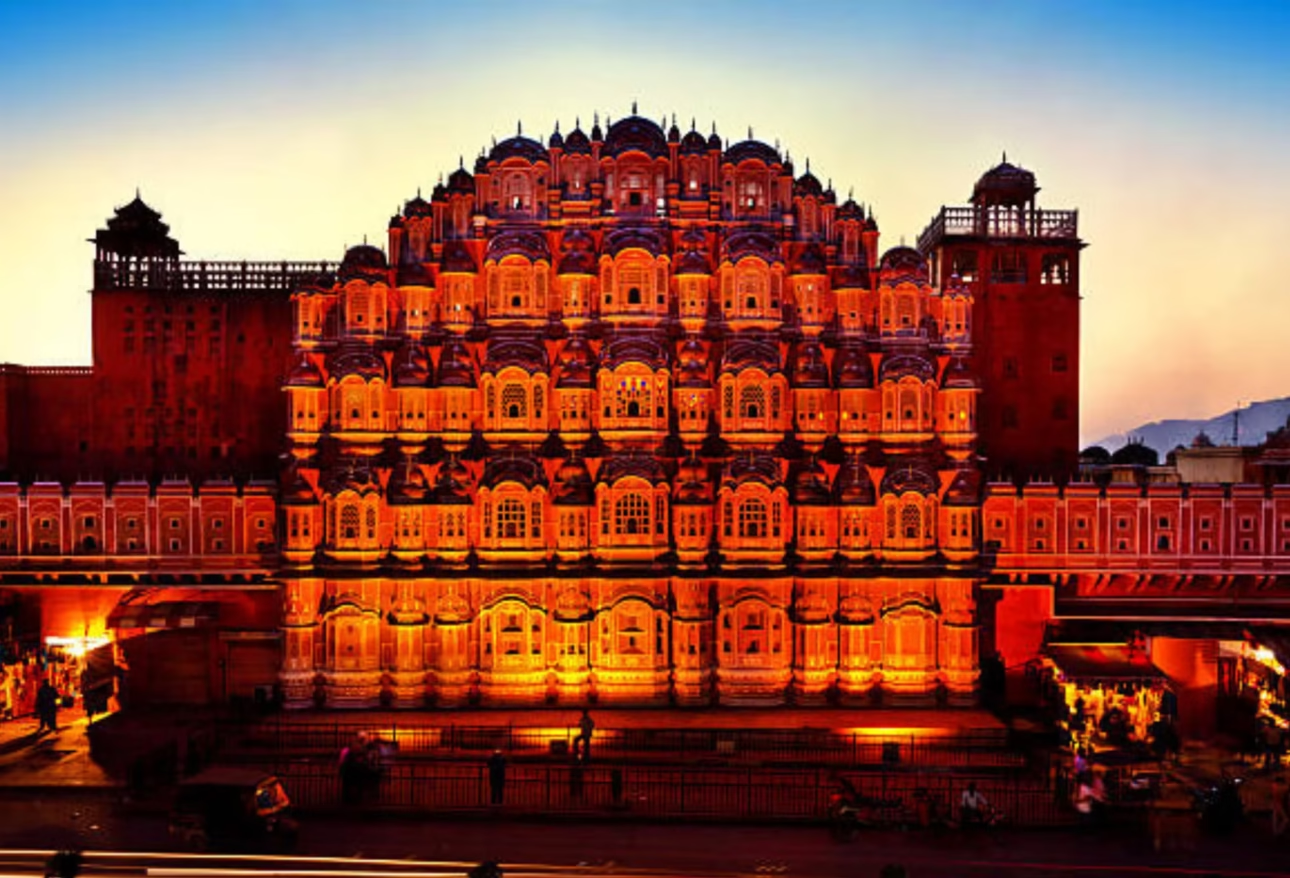
Few structures capture the essence of Jaipur like the Hawa Mahal, a delicate honeycomb of sandstone that stands as a symbol of Rajasthan’s royal artistry. Often called the Palace of Winds, this magnificent monument isn’t just beautiful; it is a story carved into stone, glass, and air.

The History Behind Hawa Mahal
When Maharaja Sawai Pratap Singh commissioned the Hawa Mahal in 1799, he did so with an intention deeper than aesthetics. The design allowed royal women who followed the purdah tradition to watch city life and royal processions without being seen. Built as an extension of the City Palace, the structure reflects the vision of the Kachwaha dynasty: art, privacy, and power blended into a single architectural marvel.
Hawa Mahal was not designed as a full-fledged palace. It has no elaborate halls or grand chambers. Instead, it is more like a beautifully crafted screen, a towering veil that connects royalty with the outside world.
Architecture That Breathes – Literally
Designed by Pandit Lal Chand Ustad, Hawa Mahal is an extraordinary demonstration of Rajput–Mughal fusion architecture.
1. The Honeycomb Façade
The monument rises five stories high, forming a pyramid-like shape with 953 tiny windows, known as jharokhas. These windows are not ornamental decorations, they are functional. They allow natural ventilation, making the palace comfortably cool even in Rajasthan’s scorching summers. That is where the name “Palace of Winds” comes from.
2. The Material Choice
Constructed using pink and red sandstone, the Hawa Mahal blends seamlessly with Jaipur’s architectural identity. The pink tones symbolize hospitality, one reason Jaipur is known as the Pink City. This color palette also connects the building with its surroundings from the City Palace to nearby markets.

3. The Inside Story
Contrary to its majestic exterior, the interior is surprisingly simple:
- No lavish halls
- Narrow corridors
- Courtyards instead of ballrooms
Its focus was not luxury, but purpose to serve as a viewing gallery and cooling refuge.
Hidden Secrets of the Hawa Mahal
1. The Top Floors Were Reserved for Women
The topmost floors were specifically designed for queens and princesses. Their elevation allowed them to watch major festivals like Teej and royal processions moving through the bustling streets below.
2. No Foundation | Yet It Stands Tall
One of the most fascinating facts is that Hawa Mahal has no traditional foundation. Despite being five stories tall, its curved structure distributes weight downward like a natural arch, making it surprisingly stable.
3. The Air-Conditioning Before Technology
The architectural design creates a Venturi effect wind enters through the lower windows, accelerates through narrow passages, and exits through upper openings. This constant airflow keeps the interior cool, working like a natural air-conditioner centuries ahead of its time.
Why Hawa Mahal Still Matters
Beyond tourism, Hawa Mahal represents:
- Innovation
- Royal culture
- A feminine viewpoint on city life
- A blend of science and art
It is a reminder that architecture can be functional, meaningful, and visually breathtaking at the same time.
Today, tourists from around the world stand before this façade, taking photographs, unaware that centuries ago, royal women looked back at them hidden behind the same windows.

Experience Hawa Mahal in Jaipur
The monument is best viewed early in the morning when the sun hits its pink sandstone surface, giving it a golden glow.Visitors often combine their trip with:
- City Palace
- Jantar Mantar
- Local markets such as Johri Bazaar, famous for gems and textiles
Walking around its honeycombed façade, climbing the narrow steps, and seeing Jaipur through the eyes of royalty is an experience you won’t forget.
If you’re planning to explore Jaipur or other parts of India with comfort, personalization, and expertise, S5 Hospitality can help turn your journey into cherished memories. With decades of industry experience, curated itineraries, and attention to detail, they make travel more than sightseeing; they make it a meaningful adventure.